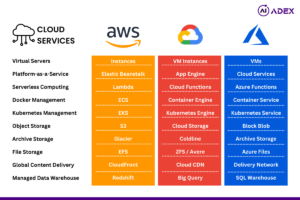
As of September 2021, AWS (Amazon Web Services), Azure (Microsoft Azure), and Google Cloud Platform (GCP) were the three leading cloud service providers. It’s important to note that the cloud computing landscape is constantly evolving, and new offerings and changes might have occurred since then.
1. **Market Share:**
– AWS: AWS was the largest cloud service provider and held the highest market share.
– Azure: Microsoft’s Azure was the second-largest cloud provider and had a significant market share.
– GCP: Google Cloud Platform ranked third in terms of market share, but it was growing rapidly and gaining popularity.
2. **Global Infrastructure:**
– AWS: AWS had the most extensive global infrastructure, with data centers located in multiple regions around the world, allowing users to deploy services in various geographic locations.
– Azure: Azure also had a robust global network of data centers, although not as extensive as AWS at that time.
– GCP: Google Cloud had data centers in many regions but was still expanding its network to match the scale of AWS and Azure.
3. **Services and Offerings:**
– AWS: AWS offered a broad range of services across computing, storage, databases, machine learning, analytics, Internet of Things (IoT), and more. It had the most extensive selection of services among the three providers.
– Azure: Microsoft Azure provided a wide array of services, including offerings like virtual machines, app services, AI/ML, data analytics, and more. Azure integrated well with Microsoft products and services, making it attractive to enterprises that heavily use Microsoft technologies.
– GCP: Google Cloud also offered a comprehensive set of services, with strengths in machine learning, big data, and data analytics. It was a popular choice for data-intensive workloads and AI-driven applications.
4. **Pricing and Cost Structure:**
– AWS, Azure, and GCP had competitive pricing models, but the cost structure could differ based on the specific services used and the region where resources were deployed. Users needed to carefully analyze their requirements to choose the most cost-effective option.
5. **Ease of Use and Integration:**
– AWS: AWS had a user-friendly console and provided comprehensive documentation. It also had a wide range of third-party integrations and developer tools.
– Azure: Microsoft Azure integrated well with existing Microsoft products and services, making it a preferred choice for organizations using Microsoft technologies.
– GCP: Google Cloud’s interface was known for its simplicity and ease of use, especially for developers familiar with Google’s ecosystem.
6. **Security and Compliance:**
– All three cloud providers invested heavily in security and compliance measures, offering various tools and features to secure data and applications.
7. **Customer Support:**
– AWS, Azure, and GCP all provided customer support options, but the level of support and service might vary based on the pricing tier and the level of the subscription.
When choosing a cloud service provider, it’s essential to assess your specific requirements, existing infrastructure, budget constraints, and long-term goals. Each provider had its strengths and was better suited for particular use cases, so conducting a thorough analysis was crucial to making an informed decision. For the most up-to-date information, I recommend checking the official websites of AWS, Azure, and Google Cloud Platform.