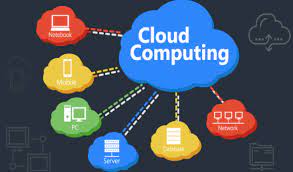
Cloud computing is a technology that allows users to access and utilize various computing resources over the internet. Instead of relying on local servers or personal computers, cloud computing relies on remote servers hosted on the internet to store, manage, and process data. These remote servers are often owned and maintained by cloud service providers.
Here are some key concepts to help you understand the basics of cloud computing:
1. **On-Demand Service**: Cloud computing provides resources on-demand. Users can quickly and easily access computing power, storage, and applications without the need for significant upfront investment or hardware setup.
2. **Scalability**: Cloud services are highly scalable, which means they can be easily adjusted to accommodate varying workloads. Businesses can scale up or down their resource usage based on their needs, allowing them to efficiently manage resources and costs.
3. **Service Models**:
– **Infrastructure as a Service (IaaS)**: Provides virtualized computing resources over the internet. Users can rent virtual machines, storage, and networking components, allowing them to build and run their own applications on the cloud provider’s infrastructure.
– **Platform as a Service (PaaS)**: Offers a platform and environment to develop, run, and manage applications without worrying about the underlying infrastructure. Developers can focus on writing code while the cloud provider handles the rest.
– **Software as a Service (SaaS)**: Delivers software applications over the internet, eliminating the need for local installation and maintenance. Users can access applications through their web browsers, and the cloud provider handles all aspects of software management.
4. **Deployment Models**:
– **Public Cloud**: Services are provided over the public internet, and resources are shared among multiple organizations and users. It offers high scalability and cost-effectiveness.
– **Private Cloud**: Cloud infrastructure is dedicated to a single organization, providing more control and customization. It can be hosted on-premises or by a third-party service provider.
– **Hybrid Cloud**: Combines elements of both public and private clouds, allowing data and applications to move between them. It provides more flexibility and allows organizations to take advantage of the benefits of both types of cloud deployments.
5. **Benefits**:
– **Cost Savings**: Cloud computing reduces upfront infrastructure costs and eliminates the need for on-site hardware maintenance.
– **Flexibility and Scalability**: Users can quickly scale resources up or down as needed.
– **Accessibility**: Users can access cloud services and applications from any device with an internet connection.
– **Reliability**: Cloud service providers typically offer high uptime and redundancy to ensure continuous availability.
6. **Concerns**:
– **Security**: Storing sensitive data on remote servers raises security concerns. Cloud providers implement security measures, but it’s essential for users to take necessary precautions as well.
– **Privacy**: Users must consider data privacy laws and regulations when storing and processing data in the cloud.
– **Data Transfer and Latency**: Large data transfers and high network latency can impact application performance.
Popular cloud service providers include Amazon Web Services (AWS), Microsoft Azure, Google Cloud Platform (GCP), and IBM Cloud, among others.
Overall, cloud computing has revolutionized the way businesses and individuals access and utilize computing resources, enabling greater efficiency, flexibility, and cost-effectiveness.