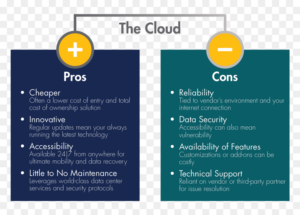
The cloud refers to the practice of using remote servers hosted on the internet to store, manage, and process data instead of using local servers or personal computers. While cloud computing offers numerous benefits, it also comes with its own set of security pros and cons. Let’s explore them:
**Security Pros of Cloud Computing:**
1. **Data Redundancy and Disaster Recovery:** Cloud providers often replicate data across multiple data centers in different locations. This redundancy ensures that if one data center fails, data can be quickly recovered from another, enhancing disaster recovery capabilities.
2. **Security Expertise:** Cloud service providers invest heavily in security measures and employ experienced security professionals. This can offer a level of security that may be difficult or costly for individual organizations to implement and maintain.
3. **Automatic Updates and Patches:** Cloud providers regularly update their infrastructure and software to address security vulnerabilities and apply the latest security patches automatically, reducing the risk of outdated or unpatched systems.
4. **Data Encryption:** Reputable cloud providers typically offer robust data encryption both in transit and at rest, making it harder for unauthorized individuals to access sensitive information.
5. **Physical Security:** Cloud data centers are usually highly secure facilities, employing measures such as 24/7 surveillance, access controls, and biometric authentication to protect physical infrastructure.
6. **Scalability:** Cloud services allow businesses to scale their resources as needed, providing the flexibility to adjust security measures based on changing requirements.
**Security Cons of Cloud Computing:**
1. **Data Breaches:** The cloud is not immune to data breaches, and if a cloud provider experiences a security breach, sensitive data of multiple clients may be compromised simultaneously.
2. **Shared Environment:** Cloud services often host data from multiple customers on the same infrastructure. While providers implement isolation measures, vulnerabilities in one client’s application could potentially affect others sharing the same resources.
3. **Dependence on Service Providers:** Organizations using cloud services rely on the provider’s security measures. If the provider experiences a security issue or goes out of business, it could impact the data and services of its clients.
4. **Compliance and Jurisdiction Concerns:** Storing data in the cloud may raise compliance issues, especially if data privacy laws differ between the cloud provider’s location and the customer’s location.
5. **Downtime and Connectivity Issues:** Cloud services require internet connectivity, and if there are network outages or disruptions, it can impact access to critical data and services.
6. **Data Handling During Migration:** The process of moving data to and from the cloud can expose it to potential security risks if not handled properly during migration.
Overall, while cloud computing offers numerous advantages, security concerns should not be taken lightly. Organizations must conduct a thorough risk assessment, choose reputable and compliant cloud providers, and implement appropriate security measures to safeguard their data and applications in the cloud environment.