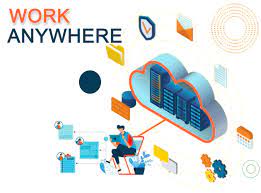
The cloud and the concept of “work from anywhere” are closely intertwined and have revolutionized the way businesses operate in recent years. Let’s explore each of these concepts:
1. The Cloud:
The cloud refers to a network of remote servers that store, manage, and process data over the internet, rather than relying on local servers or personal computers. Cloud computing enables users to access various services, applications, and resources over the internet, making it easier to scale operations, collaborate, and store data securely.
Key features of cloud computing include:
– On-demand self-service: Users can access and manage resources without the need for human intervention from the service provider.
– Broad network access: Cloud services are accessible over the internet from various devices like laptops, smartphones, and tablets.
– Resource pooling: Multiple users share resources (e.g., storage, processing power) in a multi-tenant model to achieve efficiency and cost-effectiveness.
– Rapid elasticity: Resources can be scaled up or down quickly based on demand, allowing flexibility in resource allocation.
– Measured service: Users are billed based on their actual usage of resources, which can be in the form of a pay-as-you-go model.
Popular cloud service providers include Amazon Web Services (AWS), Microsoft Azure, Google Cloud Platform (GCP), and others. Businesses of all sizes leverage cloud computing to improve their efficiency, reduce costs, and increase flexibility.
2. Work from Anywhere:
“Work from anywhere” is a work model that allows employees to perform their tasks and responsibilities from any location with an internet connection. It is an evolution of traditional remote work practices, made possible by the widespread adoption of cloud technologies and communication tools.
Key elements of the work from anywhere model include:
– Remote work: Employees have the flexibility to work outside of the traditional office environment, whether from home, co-working spaces, or other remote locations.
– Digital collaboration tools: Cloud-based communication and collaboration tools, such as video conferencing, project management software, and file-sharing platforms, enable seamless interaction and teamwork among remote team members.
– Mobile devices: The proliferation of smartphones, laptops, and tablets allows employees to access work-related resources and applications from virtually anywhere.
– Flexibility: Employees can better balance their personal and professional lives, as they are not restricted to a specific physical location.
The work from anywhere model has numerous benefits for both employees and employers. Employees can enjoy greater autonomy and work-life balance, while businesses can tap into a larger talent pool, reduce overhead costs, and increase productivity.
It’s worth noting that while the work from anywhere model offers many advantages, it also presents some challenges related to data security, employee engagement, and the need for clear communication and expectations between remote teams.
In conclusion, the cloud has been instrumental in enabling the work from anywhere revolution, empowering businesses and employees to work more flexibly, collaboratively, and efficiently in today’s digital age.