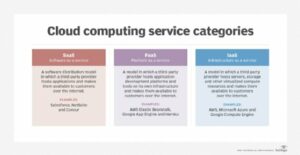
Types of Cloud Services:
1. Infrastructure as a Service (IaaS): IaaS provides virtualized computing resources over the internet. Users can rent virtual machines, storage, and networking components to build and manage their own applications and services.
2. Platform as a Service (PaaS): PaaS offers a platform that includes infrastructure, development tools, and services needed to build, deploy, and manage applications. Users can focus on coding without worrying about the underlying infrastructure.
3. Software as a Service (SaaS): SaaS delivers software applications over the internet on a subscription basis. Users can access these applications through a web browser without needing to install or maintain them locally.
4. Function as a Service (FaaS)/Serverless Computing: FaaS allows developers to execute code in response to events without managing server infrastructure. It automatically scales based on demand, and users pay only for the resources used during code execution.
5. Database as a Service (DBaaS): DBaaS offers database management and hosting in the cloud. Users can access and manage databases without the need for physical hardware or software installation.
6. Container as a Service (CaaS): CaaS provides a platform for deploying, managing, and scaling containers, enabling easier deployment and management of containerized applications.
7. Backend as a Service (BaaS): BaaS offers a pre-built backend infrastructure and services that developers can integrate into their applications to streamline development processes.
8. Disaster Recovery as a Service (DRaaS): DRaaS replicates and hosts data and applications in a cloud environment to provide failover capabilities and disaster recovery solutions.
9. Desktop as a Service (DaaS): DaaS delivers virtual desktops over the internet, allowing users to access their desktop environments from any device with an internet connection.
10. Identity as a Service (IDaaS): IDaaS provides identity and access management solutions, offering single sign-on (SSO) and multi-factor authentication capabilities.
These cloud service types provide various solutions for businesses and individuals to leverage the flexibility, scalability, and cost-effectiveness of cloud computing technologies.