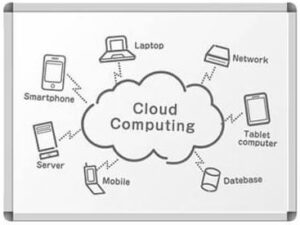
The term “The Cloud,” also known as cloud computing, refers to the practice of using a network of remote servers hosted on the internet to store, manage, and process data instead of using a local server or a personal computer. These servers are typically owned and maintained by third-party service providers.
In cloud computing, users can access and utilize various services, such as storage, databases, software applications, and processing power, over the internet on-demand. This allows individuals, businesses, and organizations to leverage the benefits of powerful computing resources without the need to invest in and manage physical hardware.
Key characteristics of cloud computing include:
1. **On-Demand Self-Service**: Users can provision and manage computing resources, such as storage and processing power, without human intervention from the service provider.
2. **Broad Network Access**: Services can be accessed over the internet from various devices, including laptops, smartphones, and tablets.
3. **Resource Pooling**: The cloud provider’s computing resources are shared among multiple users, enabling efficient utilization and scalability.
4. **Rapid Elasticity**: Users can quickly scale up or down their resource usage based on demand, allowing for flexibility and cost optimization.
5. **Measured Service**: Usage of cloud resources can be monitored, controlled, and billed, providing transparency and cost visibility.
Cloud computing has become an integral part of modern technology infrastructure, offering various deployment models, including:
a. **Public Cloud**: Services are provided over the internet to multiple customers by a third-party cloud service provider. Examples include Amazon Web Services (AWS), Microsoft Azure, and Google Cloud Platform (GCP).
b. **Private Cloud**: Computing resources are dedicated to a single organization and may be hosted on-premises or by a third-party provider. This option is often chosen by companies with specific security or compliance requirements.
c. **Hybrid Cloud**: This model combines elements of both public and private clouds, allowing data and applications to be shared between them. It provides greater flexibility and can help bridge the gap between on-premises infrastructure and cloud services.
d. **Community Cloud**: A cloud infrastructure shared by several organizations with common concerns, such as security, regulatory compliance, or industry-specific requirements.
Cloud computing has revolutionized the way businesses and individuals store data, run applications, and access computing resources. It has enabled a wide range of services and applications to be delivered efficiently and cost-effectively, contributing to the rapid growth of various industries.